Light Art
Nervous LEDman
 A small analog, interactive light object that responds to sounds and vibrations by flashing a LED.
It's very sensitive, and reacts on human voice over a distance of 3m or more, when put on the right surface, e.g. a wooden table, box or anything that vibrates.
Nervous LEDMAN consists of 3 parts : ( top down )
1) battery holder & power switch
I use a LilyPad coin battery holder or compatible and a rechargable LIR2032 battery
2) LEDMAN PCB
It's a redesign of a circuit by Yair Reshef .
The original design uses an obsolete opamp and needs 2 batteries for 6V supply. Now it runs with a single cell and uses a cheap CMOS opamp *) + 3 resistors + 1 ceramic capacitor in "beginner friendly" sized SMD packages (1206)
*) many SOT23-5 CMOS opamps, output @ pin 4, tested
3) piezo disc sensor
this is a common 35mm diameter Piezo sounder/buzzer/speaker/drum sensor. Smaller discs are not recommended until you put LEDMAN straight on a loudspeaker box ;-)
the picture shows the "elektro kitsch" (C) version with vintage power resistors as legs and arms. A flexible 38mm, 3V LED filament is used as LED.
construction notes :
resistor "arms" can be 0...10 Ohm, any wattage.
resistor "legs" can be 0...100 Ohm, any wattage.
LilyPad connection is a bit tricky : the red "+" wire is soldered straight to a LilyPad "+" pin. The black "-" wire tunnels the other LilyPad "+" pin without connection ( it must be isolated) and is soldered to LilyPad "-" pin on the rear side.
The reason is: if you solder a wire to one of LilyPads "-" pins on the battery side, the battery can't be removed anymore !
documentation :
NervousLEDman Schematics (PDF)
NervousLEDman PCB Layout ( PDF, 24pcs. 100x160mm single sided)
NervousLEDman SMD assembly (PDF)
credits go to my friend Yair Reshef and unknown early developers for inspiration
and Leah Buechley for LilyPad
respect CC NC BY SA
VolxTV
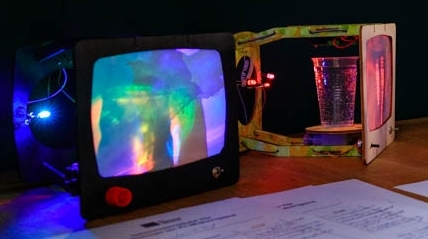
VolxTV is an analogue colour shadow projector, conceived as a replacement for the television set in the home. Its political message is: throw away your TV, build one yourself, and create your own programming to go with it.
The name VolxTV refers to the Volksempfänger (“people’s radio”) used in Nazi Germany. Cheaply mass-produced, it was intended to bring Nazi propaganda into every household.
VolxTV, however, is not mass-produced. You have to build the device yourself and create the programming yourself in order to escape the consumer propaganda of television broadcasters.
 |
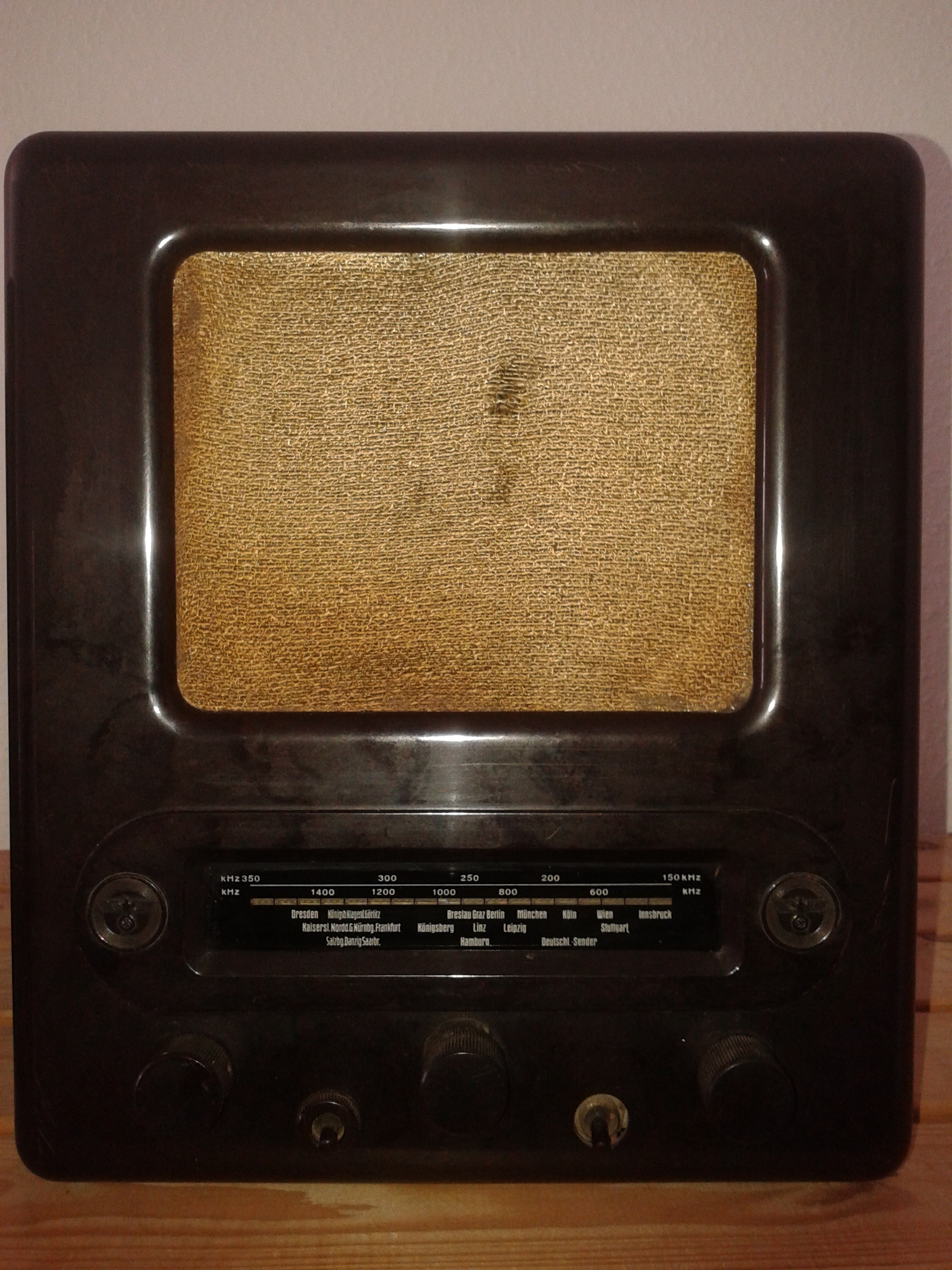 |
| 2 VolxTV @ maker fair 2025 in Tübingen [credits: Fotostudio Ale Zea] | 3rd Reich Volksempfänger |
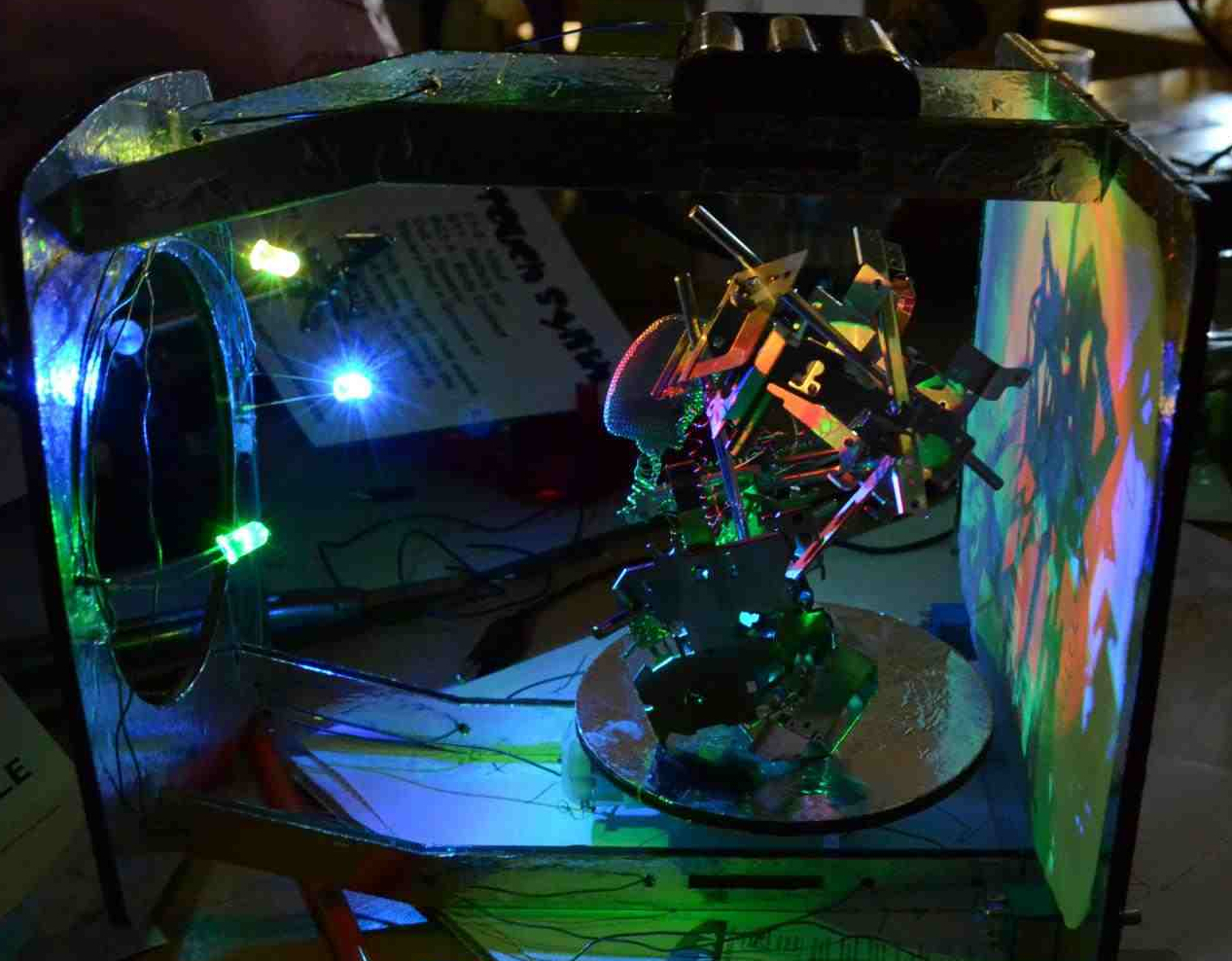
The operating principle is simple: two or more colour-changing LEDs illuminate an object placed on a turntable. The projection is displayed on a screen. Its shape is reminiscent of the old tube televisions of the 1950s to the 1970s. The VolxTV kit is made from 4 mm plywood in DIN A4 format and is laser-cut.
The current version (2026) is no longer battery-powered but is powered via USB-C, either from a mains adapter or a power bank. The speed of the turntable can be adjusted on the front panel. The colour effects are created using “slow rainbow RGB LEDs.”
VolxTV is the best-known light art project of the Kulturgüter-Schuppen. Since 2011, workshops have been held repeatedly throughout Germany, Austria,Switzerland and Spain. More than 100 VolxTV units have been built to date.
 |
|